
The Friesian Horse: History, Baroque Conformation, and Modern Disciplines
 By Eleanor Hayes
*Height, weight, and traits can vary among individual horses and breeding lines.
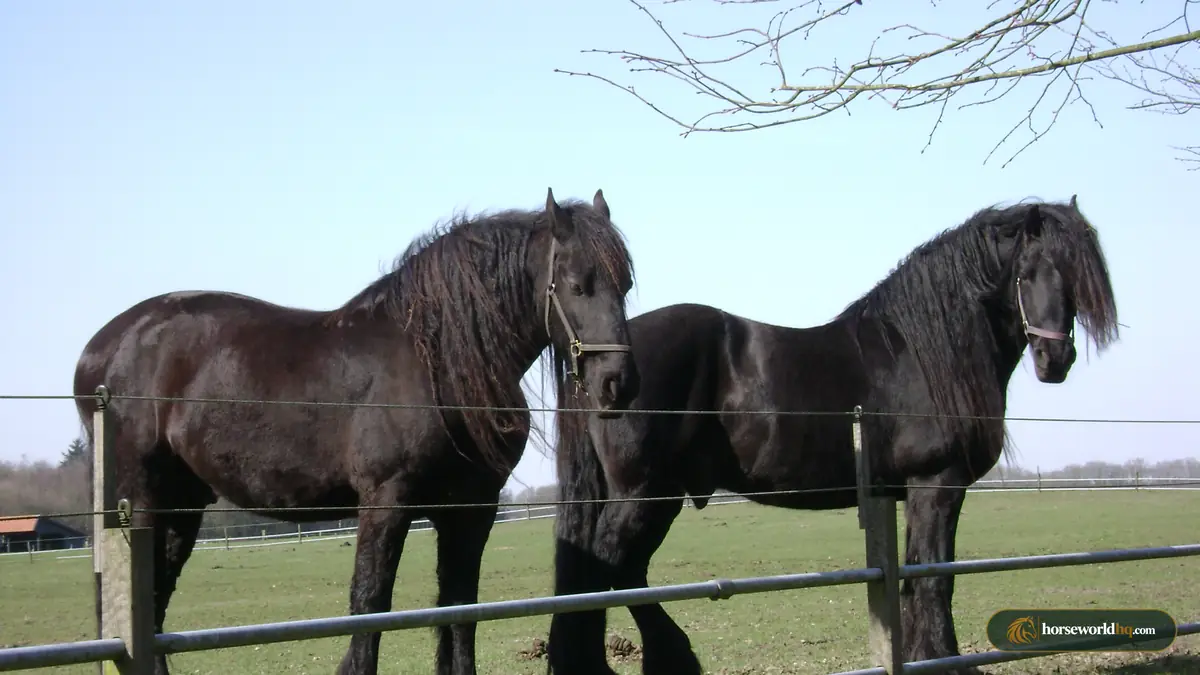
Few equines command the collective human imagination quite like the majestic Friesian horse. Emerging from the wind-swept coastal province of Friesland in the northern Netherlands, this ancient baroque breed—affectionately known as the “Black Pearl of Friesland”—is celebrated worldwide for its raven-black coat, arched crest, billowing mane, feathered fetlocks, and expressive, elevated trot. Whether carrying medieval European knights into battle, driving traditional royal carriages through cobblestone squares, or executing grand-prix dressage movements under arena spotlights, the Dutch Friesian embodies a timeless fusion of formidable power and gentle nobility. In this master breed compendium, we explore the comprehensive history, baroque biomechanics, coat genetics, KFPS studbook grading, and modern disciplines of this legendary equine partner.
Table of Contents
- 1. The Ancient Origins of Friesland: From Roman Warhorse to Medieval Knight Mount
- 2. The Renaissance Infusion: Iberian Blood & The Baroque Transformation
- 3. The Crisis of 1913 & The Royal KFPS Studbook Salvation
- 4. Baroque Conformation & Biomechanical Standards
- 5. The Trademark Gaits: Knee Action, Suspension & Natural Collection
- 6. Coat Color Genetics: Homozygous Black & The Recessive Fox Friesian
- 7. Modern Disciplines: Dressage, Carriage Driving & Sjees Traditions
- 8. The KFPS Studbook Hierarchy: Star, Crown & Model Predicates
- 9. Health, Grooming & Equine Husbandry Care
- 10. Frequently Asked Questions About the Friesian Horse
- 11. Conclusion: Celebrating the Enduring Majesty of the Dutch Black Pearl
Above-The-Fold Conformation & Discipline Reference
Top 10 Characteristics of the Friesian Horse: Quick-Reference Guide
Short on time? Whether evaluating a potential baroque riding partner or preparing for an official KFPS inspection, review our editorial panel’s top 10 core hallmarks defining the Dutch Black Pearl before exploring the detailed breed history below:
| # | Trait / Discipline | KFPS Breed Standard | Biomechanical Impact | Equestrian Value |
|---|---|---|---|---|
| 1 | Jet-Black Coat | Strictly homozygous black (E/E a/a); zero white markings allowed except occasional tiny forehead star on mares. | Dense eumelanin pigmentation reflects an obsidian mirror sheen under sunlight; deep cultural identity. | Instantly recognizable; commands sovereign prestige in exhibitions, film, and classical dressage. |
| 2 | Arched Swan Neck | High neck emergence from the chest, crested topline, vertical carriage with clean throatlatch (*keelgang*). | Biomechanical leverage facilitates natural collection, uphill balance, and dramatic poll flexion. | Allows riders to achieve collected frame and classical lightness with minimal rein resistance. |
| 3 | Flowing Feathering | Abundant silky hair (*behang*) on lower cannons and fetlocks, traditionally never clipped or trimmed. | Protects distal joints and hooves while visually accentuating elevated knee and hock movement. | Creates the iconic fairytale silhouette cherished by baroque enthusiasts worldwide. |
| 4 | Elevated Trot | High knee action, powerful hindquarter push with significant suspension (*zweefmoment*). | Cadenced, rhythmic propulsion with extraordinary joint flexion and elastic shock absorption. | Produces breathtaking, expressive movement in the dressage arena and driving harness. |
| 5 | Baroque Conformation | Broad muscular chest, sloping shoulder, compact strong back, rounded powerfully muscled croup. | Center of gravity sits naturally over the hindquarters, making collection biomechanically effortless. | Supreme stability, smooth gaits, and unmatched weight-bearing capacity for adult riders. |
| 6 | Untrimmed Manes | Long, thick, wavy double mane and tail reaching past the knees; grooming preserves full natural length. | Thermal insulation against coastal North Sea winds; sensory fly deterrent in summer. | Spectacular visual majesty in motion, inspiring equine art and equestrian photography. |
| 7 | Docile Temperament | Gentle, intelligent, people-oriented demeanor with high willingness to work (*werkwilligheid*). | Low flight reactivity combined with keen focus allows rapid learning and trust-based training. | Exceptional amateur-friendly partner, dependable carriage horse, and steady family mount. |
| 8 | Dressage Aptitude | Natural talent for collection, passage, piaffe, and pirouettes under classical and modern FEI rules. | Baroque uphill balance makes advanced collected movements far easier than for horizontal breeds. | Growing international competitive success at FEI Prix St. Georges and Grand Prix levels. |
| 9 | Carriage Driving | Historic specialty; bold trot, straight forward drive, high stamina, and alert harness presence. | Balanced draught power coupled with high-stepping elegance in pairs, teams, and four-in-hands. | Excels in combined driving competitions and ceremonial state processions. |
| 10 | Sjees Tradition | Paired with traditional two-wheeled Dutch *Sjees* gig and 18th-century Frisian folk costume. | Cultural preservation connecting modern sport horses directly to centuries of Friesland heritage. | Celebrated cultural hallmark of Dutch equestrian festivals and KFPS royal inspections. |
The Ancient Origins of Friesland: From Roman Warhorse to Medieval Knight Mount
The origins of the modern Dutch warmblood trace across more than two millennia of European history. Ancient Roman historians, including Tacitus in the first century AD, documented the sturdy native horses bred by the Frisian tribes along the North Sea coast. While Roman observers noted that early Frisian horses lacked classical Mediterranean grace, they praised their extraordinary endurance, docile temperament, and unyielding strength in harsh, swampy terrain.
During the European Middle Ages, the Friesian evolved into the quintessential destrier—the heavy warhorse of armored knights. Weighing between 1,200 and 1,500 pounds, the breed possessed the muscular bone and broad back necessary to carry knights clad in up to 100 pounds of plate armor without losing maneuverability on the battlefield. Historical records from the Crusades document Frisian knights riding their native black stallions through Germany and the Levant, where encounters with desert breeds first highlighted the advantage of combining European bone with classical agility.
The Renaissance Infusion: Iberian Blood & The Baroque Transformation
The sixteenth and seventeenth centuries brought a transformative chapter to Dutch equine breeding. During the Eighty Years’ War (1568–1648), Spain occupied the Low Countries, introducing classical Iberian stallions into the native breeding herds. Crossing the sturdy cold-blooded Frisian mares with refined Andalusian (Pura Raza Española) and Lusitano sires infused the breed with an arched swan neck, elevated knee action, lighter head carriage, and extraordinary collection.
Much like the aristocratic desert-bred Arabian horse and the sovereign PRE lines celebrated in classical academies, the newly baroque Friesian captured the admiration of European royalty. Monarchs throughout France, Germany, and the Habsburg Empire favored Friesian stallions for their high-school dressage academies (*alta escuela*) and ceremonial state carriages, praising their rhythmic trot and dramatic theatrical presence.
The Crisis of 1913 & The Royal KFPS Studbook Salvation
Despite centuries of imperial acclaim, the industrialization of agriculture in the late nineteenth and early twentieth centuries pushed the breed to the brink of total extinction. Heavy farm machinery and the demand for heavier, plodding draft breeds (such as the Dutch Draft and Bovenlander) led farmers to cross Friesians out of existence.
By 1913, the crisis had reached a catastrophic tipping point: only three purebred breeding stallions remained alive in all of Friesland—Prins 109, Friso 117, and Alva 113. Recognizing the imminent loss of their national living heritage, a dedicated group of Frisian landowners gathered in the village of Roordahuizum to form the Het Friesch Paarden-Stamboek (FPS). Through heroic selective breeding, strict inbreeding management, and fierce communal dedication, these breeders rescued the bloodline.
In 1954, in recognition of the breed’s cultural significance and hundred-year revival, Queen Juliana of the Netherlands bestowed the royal designation upon the registry, creating the prestigious KFPS (Koninklijke Vereniging “Het Friesch Paarden-Stamboek”), which today governs purebred Friesian standards across more than seventy countries worldwide.
Baroque Conformation & Biomechanical Standards
The modern breeding standard established by the KFPS evaluates horses against a precise anatomical blueprint designed to harmonize baroque power with modern athletic agility:
Head & Neck Carriage
The head is noble and refined with small, alert ears whose tips point gracefully inward. Expressive, wide-set dark eyes convey intelligence and calm nobility. The neck emerges exceptionally high from the chest, featuring a pronounced crest that arches smoothly into a clean, flexible throatlatch (*keelgang*).
Uphill Baroque Crest
Trunk & Muscular Frame
The chest is deep and powerfully muscled, transitioning into a well-sloped shoulder that allows wide foreleg reach. The back is relatively short, strong, and well-connected to a rounded, gently sloping croup (*kruis*) with a low-set, flowing tail. The ribs are well-sprung, providing expansive thoracic lung capacity.
Compact Power
Limbs & Feathering
The legs are clean and robust with well-defined hocks and dry, dense cannon bone. The pasterns are sufficiently sloped to absorb concussion during elevated trot cycles. Long, luxuriant feathers (*behang*) cascade from the lower cannons over hard, blue-black hooves, preserved untrimmed.
Dense Bone & Feathers
The Trademark Gaits: Knee Action, Suspension & Natural Collection
The biomechanics of the Dutch carriage steed are characterized by upright kinetic expression. Unlike modern sporthorses bred for horizontal ground cover, the Friesian’s center of gravity is positioned naturally rearward over the lumbosacral junction:
- The Walk: A pure, four-beat marching gait (*stap*) that must be energetic, supple, and ground-covering. The horse should step cleanly over its own hoofprints (*overtreding*) without hesitation.
- The Trot: The defining jewel of the breed. Characterized by pronounced knee flexion (*knieactie*), the foreleg lifts high before extending forward, while the hind hocks flex deeply under the body to generate a marked moment of suspension (*zweefmoment*). This creates a floating, cadenced rhythm ideal for classical dressage and harness driving.
- The Canter: A distinct three-beat gait (*galop*) that rises in an upward, uphill trajectory. While historically considered a driving horse’s weaker gait, modern KFPS breeding selection has produced sporthorse Friesians with elastic, jump-filled canters capable of performing clean flying changes and collected pirouettes.
Coat Color Genetics: Homozygous Black & The Recessive Fox Friesian
In modern breeding regulations, the KFPS studbook permits only one coat color: solid black. As established in our master scientific breakdown of equine coat color genetics, true black requires at least one dominant Extension allele (E) paired with homozygous recessive Agouti alleles (a/a):
Through century-long selection, the vast majority of registered Friesians are homozygous black (E/E a/a). This genetic purity ensures that when bred to another purebred Friesian, 100% of foals inherit the raven coat. No white markings are permitted on stallions or geldings; mares may exhibit a small forehead star (under 3 centimeters in diameter) without disqualification.
However, an intriguing historical footnote exists: the recessive chestnut allele (e). In rare instances, two heterozygous black parents (E/e a/a) can pass the recessive red gene, producing a chestnut foal known colloquially as a “Fox” Friesian. While famous stallions like Fire Magic exhibited breathtaking copper coats and demonstrated that chestnut Friesians are 100% purebred in DNA, the KFPS strictly bars chestnut stallions from breeding studbook licensing, preserving the black pearl aesthetic that inspired dark romantic legends and vampire horse names throughout European literature.
Modern Disciplines: Dressage, Carriage Driving & Sjees Traditions
Today, the versatile Dutch black horse excels across multiple high-performance equestrian disciplines:
Classical & Modern FEI Dressage
With their natural affinity for collection and elevated movement, Friesians have broken through into international Grand Prix dressage. International competitors like Adelinde Cornelissen and Peter Spahn (partnering with the famous KFPS stallion *Fryso huys Cas*) have demonstrated that a properly conditioned Friesian can score at the highest international levels, particularly excelling in the passage, piaffe, and pirouettes where uphill balance is paramount.
Combined Driving & Traditional Dutch Sjees
Carriage driving remains the soul of Friesian culture. In the Netherlands, breeding stock is tested under harness in two-wheeled traditional carriages known as the Sjees. Dating to the eighteenth century, the Sjees is driven by a gentleman and lady dressed in authentic 1850s Frisian national costume. Beyond tradition, Friesian pairs and four-in-hand teams compete globally in FEI Combined Driving, celebrated for their stamina, synchronized cadence, and unshakeable bravery through marathon water hazards.
Film, Television & Exhibition Arts
The breathtaking visual silhouette of the Friesian has made it Hollywood’s favorite noble warhorse. From classic epics like Ladyhawke (starring the black stallion *Goliath*) and The Mask of Zorro to modern blockbusters including The Chronicles of Narnia and The Hunger Games, Friesians consistently capture the world’s imagination on the silver screen.
The KFPS Studbook Hierarchy: Star, Crown & Model Predicates
The KFPS operates one of the most rigorous inspection and grading systems in the global equine industry. Every year, official Dutch inspectors travel internationally to evaluate horses at regional *keurings* (inspections):
- Veulenboek (Foal Book): All purebred foals born to registered parents enter the Foal Book.
- Stamboek (Adult Studbook): At three years of age, horses are measured and evaluated on conformation, walk, and trot. Those meeting the minimum height requirement (15.1 hands for mares, 15.3 hands for stallions) enter the adult studbook.
- Ster (Star Predicate): Awarded only to exceptional horses whose conformation and gaits rank in the top quartile of the breed.
- Kroon (Crown Predicate): A prestigious predicate awarded to superior Ster mares that achieve high scores in official IBOP riding and driving aptitude tests.
- Model Predicate: The absolute pinnacle of Friesian mare breeding. Awarded only to seven-year-old or older Crown mares that represent the ideal living archetype of KFPS conformation, movement, and reproductive excellence.
- Approved Breeding Stallions: Out of hundreds of stallion candidates presented annually at the stallion show in Leeuwarden, only a tiny fraction (typically 3 to 6 stallions per year) pass the rigorous 70-day Central Testing in Ermelo to receive breeding approval.
Health, Grooming & Equine Husbandry Care
Maintaining the health and dramatic beauty of a Friesian requires attentive equine husbandry:
- Mane and Feather Management: The luxuriant mane, forelock, and leg feathers should be kept clean, detangled with silicone-free conditioning oils, and inspected regularly. To prevent pastern dermatitis (commonly called scratches or *mok*), keep fetlock hair dry after turnout and avoid aggressive clipping.
- Genetic Screening: Responsible breeders test all breeding stock for recessive genetic conditions identified by Dutch researchers: Dwarfism (a mutation on the B4GALT7 gene causing shortened limbs and hyperflexibility) and Hydrocephalus (B3GALNT2 gene mutation). Testing ensures that carriers are never paired together, eliminating genetic risk.
- Aortic Rupture & Megaesophagus: Like several baroque breeds, Friesians have slightly higher collagen elasticity variations. Regular veterinary wellness exams, slow-feed hay nets, and balanced mineral supplementation safeguard long-term cardiovascular and digestive health.
Frequently Asked Questions About the Friesian Horse
Are all purebred Friesian horses solid black?
−
Can a Friesian horse compete successfully at Grand Prix dressage?
−
What is the difference between baroque and modern sporthorse Friesians?
−
How much daily grooming do Friesian mane and leg feathers require?
−
What are the official KFPS Star, Crown, and Model predicates?
−
What is the average lifespan and temperament of a Friesian horse?
−
Conclusion: Celebrating the Enduring Majesty of the Dutch Black Pearl
From the stormy coastlines of medieval Friesland to modern international Olympic dressage arenas, the Friesian horse has conquered hearts across centuries. With its breathtaking obsidian coat, soaring trot, and generous, noble soul, this Dutch treasure exemplifies the very finest qualities of classical equestrian partnership.
Whether you dream of driving a traditional Sjees carriage through morning mist, performing collected passage under arena spotlights, or simply welcoming a gentle black giant to your barn, the Friesian rewards trust with lifelong devotion. Continue exploring the rich world of equines in our horse breeds compendium, discover cultural traditions across the equine cultural archives, and learn the science of equine beauty in our coat color genetics library.
3 Thoughts on “The Friesian Horse: History, Baroque Conformation, and Modern Disciplines”