
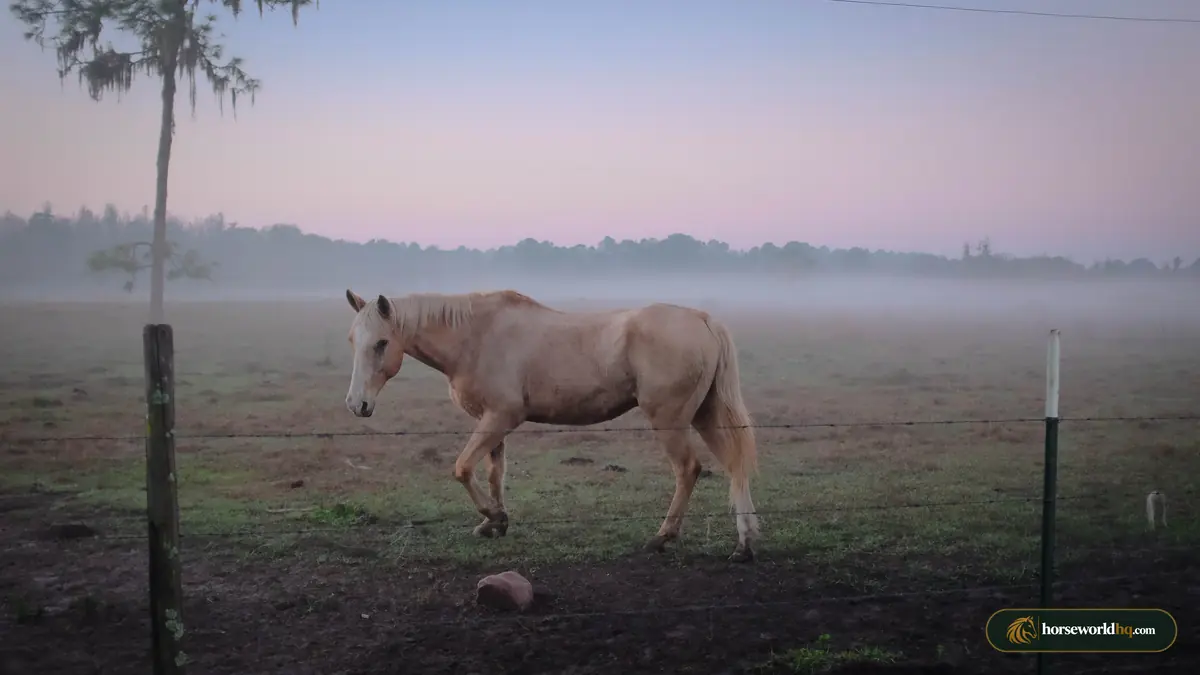
Equine Coat Color Genetics: Understanding Agouti, Extension, and Cream Dilution
 By Eleanor Hayes
*Height, weight, and traits can vary among individual horses and breeding lines.
Deciphering equine coat color genetics is one of the most rewarding pursuits in modern equestrian science and breeding management. For centuries, horsemen attributed coat colors to mysterious artistic luck or maternal impressions. Today, advances in molecular genomicsâ — spearheaded by pioneering research from the UC Davis Veterinary Genetics Laboratoryâhave revealed that every breathtaking equine hue, from the mirror-black sheen of a sovereign stallion to the shimmering golden glow of an imperial palomino, is governed by precise Mendelian biochemical pathways. By understanding the foundational interplay of the Extension and Agouti loci, and tracing how dilution modifiers like Cream alter pigment granules, equestrians and breeders can predict foal colors with mathematical certainty and safeguard genetic health across generations.
Table of Contents
- 1. The Molecular Foundations of Equine Melanin: Eumelanin vs. Phaeomelanin
- 2. The Extension Locus (E / MC1R): The Master Red/Black Switch
- 3. The Agouti Locus (A / ASIP): Regulating Point Distribution
- 4. The Three Foundation Base Colors of the Equine World
- 5. The Cream Dilution Gene (CR / SLC45A2): Incomplete Dominance in Action
- 6. Secondary Dilution Loci: Dun, Champagne, Pearl & Silver
- 7. Predicting Foal Colors: The Mathematics of Punnett Squares
- 8. Laboratory Genetic Testing: Hair Roots, DNA Certificates & Breeding Audits
- 9. Frequently Asked Questions About Equine Coat Color Genetics
- 10. Conclusion: Mastering Equine Color Genetics for Breeding & Horsemanship
Above-The-Fold Genotype & Phenotype Reference
Top 15 Equine Color Genotypes: Quick-Reference Matrix
Navigating equine coat color genetics begins by decoding how foundational base alleles combine with dilution genes. Use this comprehensive reference matrix to match genetic notation directly to visible coat phenotypes across major international breeds:
| # | Color Phenotype | Base Genotype (E & A) | Modifier / Dilution | Defining Coat & Points | Associated Breeds |
|---|---|---|---|---|---|
| 1 | True Black | E/E a/a or E/e a/a |
Non-dilute (cr/cr) | Uniform black pigmentation across body, mane, tail, and muzzle; no red hair. | Friesian, Percheron, Fell Pony, Dales Pony, Thoroughbred, Quarter Horse |
| 2 | Classic Bay | E/E A/A, E/e A/a |
Non-dilute (cr/cr) | Reddish-brown or mahogany body; black points on lower legs, mane, tail, and ear tips. | Arabian, Thoroughbred, Cleveland Bay, Andalusian (P.R.E.), Warmblood |
| 3 | Wild Bay | E/- Aâº/- |
Non-dilute (cr/cr) | Reddish body with black points restricted strictly to pasterns/fetlocks; lighter mane/tail edges. | Przewalski’s horse, Exmoor Pony, Caspian, rare Thoroughbred lines |
| 4 | Seal Brown | E/- Aáµ—/- |
Non-dilute (cr/cr) | Deep dark brown or nearly black body with characteristic tan/cinnamon muzzle, eyes, and flanks. | Standardbred, Quarter Horse, Thoroughbred, Morgan, Trakehner |
| 5 | Chestnut / Sorrel | e/e -/- (any Agouti) |
Non-dilute (cr/cr) | Red, copper, or liver body with matching or lighter red/flaxen mane and tail; zero black hair. | Suffolk Punch, Haflinger, Arabian, Quarter Horse, Belgian Draft |
| 6 | Palomino | e/e -/- |
Single Cream (CR/cr) | Shimmering golden body ranging from light butter to deep gold; white or flaxen mane and tail. | Quarter Horse, Morgan, Lusitano, Welsh Pony, Saddlebred |
| 7 | Buckskin | E/- A/- |
Single Cream (CR/cr) | Warm golden, tan, or yellow body; crisp black points on lower legs, mane, tail, and ear rims. | Quarter Horse, Andalusian (P.R.E.), Connemara Pony, Akhal-Teke, Kinsky |
| 8 | Smoky Black | E/- a/a |
Single Cream (CR/cr) | Visually indistinguishable from black or faded dark bay; carries hidden cream dilute allele. | Quarter Horse, Morgan, Andalusian, Gypsy Vanner, Rocky Mountain Horse |
| 9 | Cremello | e/e -/- |
Double Cream (CR/CR) | Pale ivory or cream coat, white mane and tail, unpigmented rosy-pink skin, luminous blue eyes. | Quarter Horse, Lusitano, Welsh Pony, Morgan, Paint Horse |
| 10 | Perlino | E/- A/- |
Double Cream (CR/CR) | Pale cream-to-biscuit body with darker reddish-orange or amber points; pink skin and blue eyes. | Quarter Horse, Andalusian (P.R.E.), Akhal-Teke, Lusitano, Morgan |
| 11 | Smoky Cream | E/- a/a |
Double Cream (CR/CR) | Pale ivory coat, slightly darker smoky tint on mane/tail, rosy-pink skin, vivid blue eyes. | Quarter Horse, Morgan, Andalusian, Miniature Horse |
| 12 | Classic Dun (Zebra Dun) | E/- A/- |
Dun Factor (D/-) | Tan/slate body, crisp black dorsal stripe, leg barrings, shoulder cross, dark face mask. | Fjord Horse, Highland Pony, Quarter Horse, Mustang, Sorraia |
| 13 | Amber Champagne | E/- A/- |
Champagne (CH/-) | Metallic golden-amber body, chocolate/taupe points, pinkish mottled skin, hazel/green eyes. | Tennessee Walking Horse, Missouri Fox Trotter, Quarter Horse |
| 14 | Isabelo (Pearl Dilute) | e/e -/- |
Homozygous Pearl (prl/prl) | Iridescent apricot-pearl sheen, pale amber/green eyes, lavender-pink skin; historic royal Spanish coat. | Andalusian (Pura Raza Española), Lusitano, Paso Fino |
| 15 | Silver Dapple | E/- a/a |
Silver (Z/-) | Dilutes black eumelanin to rich chocolate or gunmetal grey with dramatic flaxen/white mane and tail. | Rocky Mountain Horse, Icelandic Horse, Shetland Pony, Morgan |
The Molecular Foundations of Equine Melanin: Eumelanin vs. Phaeomelanin
At the microscopic core of all equine coat coloration lies a single specialized cell type: the melanocyte. Situated within hair follicles and the basal layer of the epidermis, melanocytes synthesize pigment granules and transfer them into growing hair shafts and skin cells. Remarkably, regardless of whether a horse appears jet black, fiery copper, golden champagne, or dapple grey, mammalian biology produces only two chemical forms of melanin pigment:
- Eumelanin (Black / Dark Brown Pigment): An insoluble, dense polymeric pigment composed of 5,6-dihydroxyindole subunits. Eumelanin efficiently absorbs visible light across all wavelengths, producing deep black, dark brown, and cool slate tones. High concentrations of eumelanin create the striking obsidian coat that defines the iconic Friesian horse and the atmospheric aesthetics explored in our directory of vampire horse names.
- Phaeomelanin (Red / Yellow Pigment): A sulfur-rich, alkali-soluble polymer incorporating cysteine amino acid residues. Phaeomelanin reflects red, orange, and yellow spectrums of light, generating rich chestnuts, fiery sorrels, and the golden body tones celebrated in our compendium of palomino horse names.
The molecular biological “decision” of whether a melanocyte synthesizes eumelanin or phaeomelanin is controlled primarily by the melanocortin 1 receptor (MC1R), a seven-transmembrane G-protein-coupled receptor embedded in the melanocyte membrane. When stimulated by alpha-melanocyte-stimulating hormone (α-MSH), MC1R triggers intracellular cyclic adenosine monophosphate (cAMP) production, directing the enzymatic machinery (notably tyrosinase and tyrosinase-related proteins) to produce eumelanin. When the receptor is inactivated or blocked by agouti signaling protein (ASIP), the cell defaults to producing phaeomelanin.
The Extension Locus (E / MC1R): The Master Red/Black Switch
The Extension locus, situated on equine chromosome 3 (ECA3p12), represents the fundamental biological switch governing all horse coat coloration. The Extension gene encodes the MC1R receptor itself. Every domestic horse inherits two alleles at this locus—one from the sire and one from the dam:
- The Dominant Allele (E): Produces a fully functional MC1R receptor. A single copy of E is sufficient to enable the synthesis of eumelanin. Horses carrying either homozygous E/E or heterozygous E/e genotypes possess black-based coats (capable of displaying black or bay hair).
- The Recessive Allele (e): Results from a single base-pair missense mutation (c.248C>T in exon 1) that substitutes a phenylalanine residue for a serine residue at codon 83. This alteration disrupts the receptor’s functional conformation, preventing α-MSH signaling. Consequently, horses that are homozygous recessive (e/e) can synthesize only phaeomelanin throughout their coat, mane, and tail.
This fundamental biological rule explains why chestnut is a strictly recessive phenotype. A horse with an e/e genotype is physically incapable of manufacturing black coat hair. Furthermore, two chestnut horses mated together will always produce 100% chestnut offspring, because neither parent possesses a functional E allele to pass on to the next generation.
The Agouti Locus (A / ASIP): Regulating Point Distribution
While the Extension locus determines whether a horse can produce black eumelanin, the Agouti locus—located on equine chromosome 22 (ECA22q15)—controls where that black pigment is allowed to appear on the horse’s body. The gene encodes the Agouti Signaling Peptide (ASIP), a paracrine signaling molecule that competitively binds to MC1R and temporarily blocks eumelanin synthesis.
In horses with at least one dominant E allele, the Agouti locus acts as a localized pigment restrictor:
- The Dominant Agouti Allele (A): Restricts black eumelanin production strictly to the “points” of the horse—the lower legs, mane, tail, ear tips, and muzzle rims—while allowing the trunk and barrel of the horse to synthesize reddish phaeomelanin. This interaction produces the classic Bay horse (E/- A/-).
- The Recessive Allele (a): Represents an 11-base-pair deletion in exon 2 of the ASIP gene. This loss-of-function mutation leaves ASIP non-functional. Without the localized restrictor, eumelanin synthesis proceeds uninhibited across the entire body, creating a uniform True Black horse (E/- a/a).
Crucially, the Agouti gene requires eumelanin to act upon. In a chestnut horse (e/e), there is no black pigment to restrict. Therefore, a chestnut horse can carry Agouti alleles silently (e.g., e/e A/A, e/e A/a, or e/e a/a) with zero visible effect on its red coat. However, when bred to a homozygous black partner (E/E a/a), that chestnut parent will pass its hidden A allele, producing bay foals from black matings!
The Three Foundation Base Colors of the Equine World
Before any dilution, spotting pattern, or grey modifier enters the genetic picture, every horse on earth belongs genetically to one of three foundation base colors:
True Black
Genotype: E/E a/a or E/e a/a. Uniform eumelanin distribution across the entire equine silhouette. True black horses exhibit dark brown or black skin, dark eyes, and zero brown or reddish hairs around the muzzle or flanks. In breeds like the Friesian, selective breeding has permanently fixed the homozygous E/E a/a genotype.
Black Base (E/- a/a)
Classic Bay
Genotype: E/- A/-. The evolutionary ancestral wild-type base coat of the equine species. The body ranges from rich golden-tan to deep mahogany red, while the lower limbs, mane, tail, and ear margins remain stark jet black. Classic bay dominates prestigious breeds including the Thoroughbred, Cleveland Bay, and noble Arabian horse.
Bay Base (E/- A/-)
Chestnut & Sorrel
Genotype: e/e -/-. Pure phaeomelanin expression completely devoid of black hair. Shades range from bright copper sorrel to deep, lustrous liver chestnut. Mane and tail may match the body or display flaxen (light blond) shading. The Suffolk Punch draft breed has been bred exclusively homozygous chestnut for centuries.
Red Base (e/e -/-)
The Cream Dilution Gene (CR / SLC45A2): Incomplete Dominance in Action
Once a horse’s foundation base coat is established, dilution loci can dramatically alter the density, shape, and distribution of pigment granules within the hair shaft. Among these modifiers, none is more celebrated in worldwide equestrian culture than the Cream gene (CR).
Located on equine chromosome 16 (ECA16q24), the Cream locus resides within the SLC45A2 gene (solute carrier family 45 member 2), which encodes a membrane-associated transport protein involved in melanin synthesis. A single nucleotide transition (c.457G>A) results in an aspartic acid to asparagine substitution. Unlike standard dominant/recessive traits, Cream operates through incomplete dominance (a dosage effect):
- Zero Copies (cr/cr): Wild-type non-dilute coat. Full normal pigment synthesis.
- One Copy (CR/cr — Heterozygous): Dilutes phaeomelanin (red pigment) intensely to gold or cream, while leaving eumelanin (black pigment) virtually untouched. This creates the stunning Single Cream Dilutes.
- Two Copies (CR/CR — Homozygous): Dilutes both phaeomelanin and eumelanin drastically to pale ivory, washes skin pigment to rosy pink, and alters iris pigmentation to pale blue. This produces the magnificent Double Cream Dilutes.
Single Cream Dilutions: Palomino, Buckskin & Smoky Black
When a horse inherits one Cream allele, its visual appearance depends entirely on which base coat it possesses:
- Palomino (Chestnut + 1 Cream =
e/e CR/cr): Because chestnut horses produce only red phaeomelanin, a single Cream allele dilutes the entire body coat to a rich, metallic golden sheen, while bleaching the mane and tail to stark white or flaxen. Palominos have captured human admiration from ancient crusader mounts to the royal golden steeds of Queen Isabella of Spain. - Buckskin (Bay + 1 Cream =
E/- A/- CR/cr): On a bay base, Cream selectively dilutes the red body hair to warm tan, buttermilk, or rich golden amber, while leaving the black eumelanin points (legs, mane, tail, ear rims) starkly unaffected. Buckskins are celebrated for their sharp visual contrast and high performance in Western disciplines, working equitation, and classical dressage. - Smoky Black (Black + 1 Cream =
E/- a/a CR/cr): Because a single Cream allele primarily dilutes red phaeomelanin, a true black horse carrying one Cream allele appears visually black or dark mahogany bay. Many smoky blacks are registered incorrectly as black or dark bay until genetic testing reveals their hidden Cream allele—making them secret producers of palomino and buckskin foals!
Double Cream Dilutions: Cremello, Perlino & Smoky Cream
When two Cream alleles combine, the dosage effect is powerful enough to dilute even dense eumelanin pigment granules:
- Cremello (Chestnut + 2 Creams =
e/e CR/CR): Completely bleached cream body, porcelain white mane and tail, rosy pink skin, and clear, icy blue eyes. When crossed with any non-dilute chestnut mate, a Cremello is mathematically guaranteed to produce 100% Palomino foals! - Perlino (Bay + 2 Creams =
E/- A/- CR/CR): Cream-to-pearl body with visibly darker reddish-orange, café-au-lait, or amber shading on the lower legs, mane, and tail. Like Cremellos, Perlinos possess pink skin and blue eyes. Bred to a chestnut, a Perlino guaranteed produces buckskin or palomino offspring. - Smoky Cream (Black + 2 Creams =
E/- a/a CR/CR): Uniform ivory-cream body with subtle cool smoky tones in the mane and tail points, pink skin, and blue eyes. Genetically homozygous black and homozygous cream, a smoky cream will never produce a chestnut foal.
Debunking the “Lethal Albino” Equine Myth
For decades, equestrian folklore incorrectly claimed that double-dilute blue-eyed horses were “albinos” suffering from systemic fragility, deafness, or blindness. In mammalian genetics, true albinism (caused by complete tyrosinase deficiency, c/c) is biologically lethal in embryonic development in horses and has never been documented in live equines. Double cream dilutes (Cremello, Perlino, Smoky Cream) are completely healthy, physiologically robust equines with normal vision and hearing. While their unpigmented pink skin requires protection from intense solar UV exposure to prevent sunburn, their genetic viability is 100% sound.
Secondary Dilution Loci: Dun, Champagne, Pearl & Silver
Beyond Cream, the equine genome features several additional dilution systems that operate through distinct biochemical pathways:
The Dun Factor (D / TBX3): Primitive Camouflage Markings
Located on chromosome 8, the Dun locus (TBX3) represents an ancient evolutionary camouflage mechanism. Unlike Cream, Dun evenly dilutes both red and black body coat hair while leaving specific “primitive markings” intensely dark and undiluted. Every true dun horse displays a sharp, dark dorsal stripe running from the poll through the tail, accompanied by horizontal zebra leg barrings, shoulder crossbars, and dark facial shading. On a bay base, it produces Classic Dun (Zebra Dun); on chestnut, Red Dun; and on black, the smoky slate-grey Grullo.
The Champagne Dilution (CH / SLC36A1): Metallic Radiance & Mottled Skin
Found primarily in American breeds like the Tennessee Walking Horse, Quarter Horse, and Missouri Fox Trotter, Champagne (CH) dilutes both red and black pigment to warm metallic tones. Champagne foals are born with bright blue eyes that transition over maturity to hazel, green, or pale amber. Adult champagne horses exhibit distinctive freckled, mottled pink skin around the eyes, muzzle, and sheath, alongside a mirror-like iridescent sheen across their coat.
The Pearl Locus (prl / SLC45A2): The Royal Iberian Dilution
The Pearl gene is a rare recessive allele situated on the same SLC45A2 gene as Cream. When homozygous (prl/prl), Pearl creates an apricot-pearl metallic sheen with pale amber eyes and lavender-tinted skin, celebrated in Spain as the royal Isabelo coat in the Pura Raza Española (Andalusian) and Lusitano. Remarkably, a single Pearl allele can interact with a single Cream allele (CR/prl) to form a “pseudo-double dilute,” mimicking the blue-eyed cream phenotype with distinct champagne-like skin!
The Silver Dapple Gene (Z / PMEL17): Eumelanin-Selective Dilution
The Silver locus (Z) presents an intriguing mirror contrast to Cream: it selectively dilutes only black eumelanin, leaving red phaeomelanin completely untouched. On a true black base (E/- a/a Z/-), Silver dilutes the body to chocolate, dappled charcoal, or gunmetal grey, while lightening the black mane and tail to shimmering flaxen or silver white. This striking coat is famously preserved in the Rocky Mountain Horse. Responsible breeders test for Silver because homozygous Z/Z horses can be predisposed to Multiple Congenital Ocular Anomalies (MCOA), a benign eye development variation managed through thoughtful mate selection.
Predicting Foal Colors: The Mathematics of Punnett Squares
Predicting foal coat colors requires applying Gregor Mendel’s law of independent assortment. Because the Extension, Agouti, and Cream loci reside on different chromosomes, their alleles sort independently during gamete formation.
The 100% Palomino Production Formula
Commercial breeders seeking to produce guaranteed Palomino foals without risk of unexpected black, bay, or double-dilute outcomes utilize the classic cross:
Offspring Genotype: 100% e/e CR/cr → 100% Palomino Phenotype!
Because both parents are homozygous for recessive red (e/e), black eumelanin is impossible. Because the Cremello parent passes exactly one CR allele and the chestnut parent passes exactly one non-dilute cr allele, 100% of offspring inherit the single-cream heterozygous genotype.
Laboratory Genetic Testing: Hair Roots, DNA Certificates & Breeding Audits
While visual inspection (phenotyping) is traditional, visual evaluation can easily mislead breeders. A smoky black can visually disguise itself as a true black; a heterozygous bay can mask a recessive red allele; and a dark chestnut can mimic a bay. Today, definitive verification requires commercial DNA sequencing through accredited veterinary laboratories.
Accredited laboratories such as the UC Davis Veterinary Genetics Laboratory, Animal Genetics, and Etalon Diagnostics test for the full equine coat color panel using hair root bulbs (typically 30–40 mane or tail hairs pulled with the follicle intact) or blood EDTA samples. In addition to coat color loci (Extension, Agouti, Cream, Dun, Champagne, Pearl, Silver, Roan, Grey, and White Spotting), comprehensive genetic testing panels audit for critical inherited health conditions, including Hyperkalemic Periodic Paralysis (HYPP), Polysaccharide Storage Myopathy (PSSM1), and Lethal White Overo (LWO).
Frequently Asked Questions About Equine Coat Color Genetics
Can two chestnut horses ever produce a bay or black foal?
−
What is the genetic difference between a buckskin and a dun horse?
−
How do you tell a smoky black apart from a true black horse?
−
Are double cream dilutes like Cremellos and Perlinos considered albino?
−
Can a horse carry the Agouti gene without showing any bay coloring?
−
Which genetic testing laboratories provide official coat color verification?
−
Conclusion: Mastering Equine Color Genetics for Breeding & Horsemanship
Understanding the molecular science behind equine coat color genetics elevates our appreciation for the biological artistry of the horse. Far from being a matter of unpredictable chance, coat coloration follows elegant genetic principles that empower horse owners, breeders, and equestrians to make informed breeding decisions, verify registration pedigrees, and celebrate the full spectrum of equine beauty.
Whether your passion lies in preserving the ancient porcelain lines of the Carthusian monastery, breeding the next generation of golden palominos, or unlocking the intricate spotted tapestries of the leopard complex, genetic literacy is the cornerstone of modern horsemanship. Continue expanding your equestrian knowledge across our equine coat color genetics archive, explore noble lineages in the horse breeds compendium, and discover timeless equestrian lore in our equine cultural traditions.
2 Thoughts on “Equine Coat Color Genetics: Understanding Agouti, Extension, and Cream Dilution”